

Quick answer
Whale watching in Reykjavik delivers an 85–95% sighting success rate year-round, with minke whales, white-beaked dolphins, and harbour porpoises appearing most frequently in Faxaflói Bay. Tours depart daily from the Old Harbour between April and October, with reduced schedules in winter months when humpback whales migrate through Icelandic waters. The experience's value depends on your comfort with open-water conditions and whether you prioritize guaranteed wildlife encounters over scenic coastal exploration.
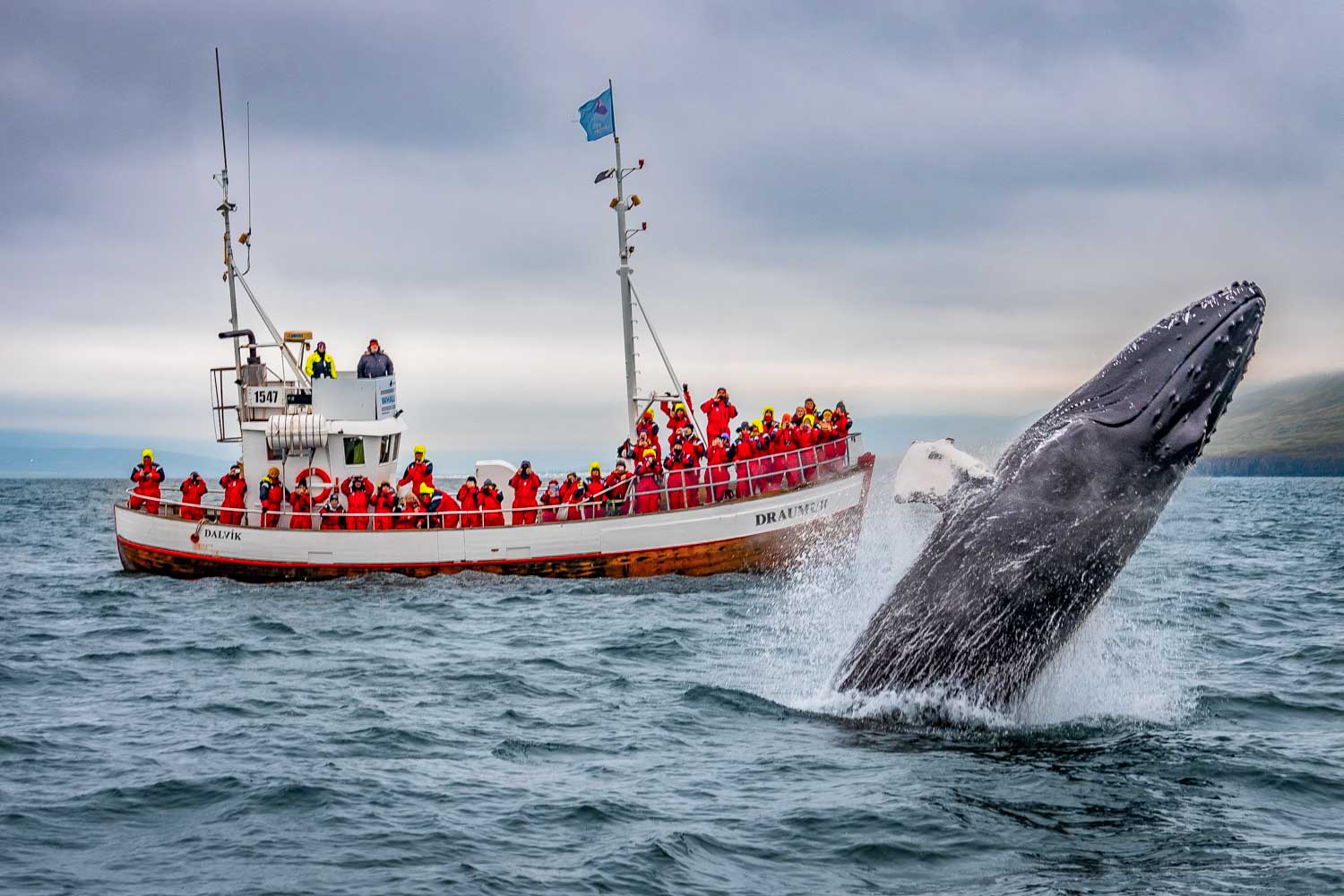
Iceland sits atop the Mid-Atlantic Ridge, where cold Arctic currents collide with warmer Gulf Stream waters, creating nutrient upwellings that sustain one of the North Atlantic's densest concentrations of marine life. Faxaflói Bay, the body of water framing Reykjavik's western shore, functions as a seasonal feeding ground for 23 recorded cetacean species—though only six appear with statistical regularity on commercial tours. Minke whales account for roughly 60% of all sightings from April through September, surfacing within 50 meters of tour vessels as they hunt capelin and sand eels in the bay's shallow banks. White-beaked dolphins travel in pods of 10 to 30 individuals and breach more predictably than larger cetaceans, making them the most photographed species on Reykjavik departures. Harbour porpoises, Iceland's smallest resident whale, surface briefly and require attentive scanning—guides trained in cetacean behavior identify them by dorsal fin shape and surfacing intervals rather than visible blows. Humpback whales represent the aspirational sighting. These migratory baleen whales pass through Icelandic waters during spring and autumn, with peak appearances in May and late August when krill blooms draw them closer to shore. A humpback breach—a 30-ton animal launching itself vertically from the water—occurs on fewer than 15% of tours, though fluke displays during deep dives happen more frequently. Orcas, blue whales, and fin whales appear sporadically, usually farther offshore than standard three-hour itineraries cover. Weather determines not just sighting quality but whether tours operate at all. Operators in Reykjavik's Old Harbour cancel departures when wind speeds exceed 10 meters per second or wave heights surpass two meters—conditions that occur on 20–25% of scheduled days between November and March. The bay's exposure to northwesterly swells means even moderate wind generates motion that affects passengers prone to seasickness. Tours departing between 08:00 and 11:00 encounter calmer seas and better light angles for photography, though afternoon departures between 14:00 and 17:00 offer longer daylight during summer months. The question of whether whale watching in Reykjavik justifies its cost resolves to whether you value probabilistic wildlife encounters. Unlike zoo visits or aquarium exhibits, marine tours operate within ecosystems you cannot control. Operators provide warm overalls and access to heated cabins, but open-deck viewing remains the standard for clear sightlines—prepare for wind chill even in July.
“Faxaflói Bay functions as a seasonal feeding ground for 23 recorded cetacean species, though only six appear with statistical regularity on commercial tours.”
When Is Whale Watching in Iceland Worth It? Seasonal and Daily Timing
The peak season from April to September offers the highest wildlife density and favorable visibility in Faxaflói Bay. Aligning your visit with the recommended arrival window ensures optimal conditions for spotting marine life.
Summer (June–August)
High seasonal volumeMild; 10°C to 15°C. Long daylight hours maximize spotting potential.
Peak activity for minke whales and dolphins. Daily tours run frequently throughout this period.
Spring (April–May)
Moderate visitor levelsCool; 3°C to 9°C. Variable conditions common.
Migratory patterns bring increased sightings. Early season offers quieter departure experiences.
Autumn (September–October)
Lower visitor densityChilly; 2°C to 7°C. Shorter daylight hours.
Whales remain active in the bay. Lower passenger numbers allow for more personal space on board.
Verdict: The best balance of wildlife activity and visibility occurs between June and August, specifically within the 08:00–20:00 arrival window.
Is Whale Watching in Iceland Worth It: RIB Boats vs. Traditional Vessels
Visitors in Reykjavík typically choose between the agile nature of RIB boats and the spacious, stable environment of traditional large cruisers when exploring Faxaflói Bay. Your preference regarding speed, group size, and movement on the water determines which vessel best suits your trip.
| RIB Boats High speed maneuverability | Traditional Vessels Spacious deck platforms | |
|---|---|---|
| Speed and Agility | Higher cruise speeds for covering large areas quickly | Lower speeds with gradual movement |
| Proximity to Wildlife | Closer proximity due to low-profile design | Maintained distance from wildlife for safety |
| Comfort Levels | Seated position with wind protection gear | Walk-around decks with indoor cabins |
| Stability in Rough Seas | Higher sensitivity to wave impact | Greater stability due to size and displacement |
| Group Size | Limited to approximately 12 passengers | Capacity for over 100 passengers |
Verdict: Choose a RIB boat if you prioritize speed and intimate wildlife encounters, or select a traditional vessel if you prefer cabin access, stability, and room to move around.
Mistakes to Avoid When Deciding Is Whale Watching in Iceland Worth It
Wildlife watching depends on conditions beyond any operator's control. Understanding what can go wrong helps set realistic expectations and prevents disappointment.
Expecting guaranteed whale sightings on every tour
Whales are wild animals with no fixed schedule. Operators typically offer rebooking if no cetaceans are spotted, but weather and animal behavior determine success rates. Check recent sighting reports and choose operators with high success percentages, but accept that nature doesn't guarantee appearances.
Booking without checking the marine forecast first
Rough seas force cancellations and make spotting difficult even when tours run. Check wind speed and wave height forecasts for Faxaflói Bay 24–48 hours before your tour. Conditions above 10 m/s wind or 2-meter swells significantly reduce visibility and comfort.
Assuming summer guarantees better sightings than other seasons
Minke whales and harbor porpoises appear year-round in Faxaflói Bay, while humpbacks peak June–August but remain unpredictable. Winter offers orcas and reduced crowds. Season affects species mix and sea conditions, not whether the experience justifies the cost.
Skipping warm clothing because the forecast shows sun
Ocean temperatures near Iceland remain 6–12°C year-round, and wind chill on a moving boat drops perceived temperature sharply. Bring waterproof layers and insulated clothing regardless of shore weather. Tours provide suits, but your own base layers matter.
Judging value solely on sighting duration
A responsible operator prioritizes animal welfare and follows approach regulations—remaining 50 meters from whales and limiting interaction time. Tours emphasizing longer "guaranteed contact" may pressure wildlife or exaggerate what's ethically possible.
Getting to the Departure Point: Is Whale Watching in Iceland Worth It Logistics-Wise?
Whale watching tours depart from Reykjavík Old Harbour (Gamla Höfn), located in the city center within the 101 district. The area is accessible via public transport, car, or a short walk from most downtown locations.
Strætó lines 1, 3, 6, or 14 to Mýrargata stop
Route 41 toward Reykjavík city center, parking at Old Harbour
Walking from Harpa Concert Hall along the waterfront
Is Whale Watching in Iceland Worth It: Understanding Costs and Value
Access to the Reykjavík Old Harbour is free for all visitors. The costs associated with whale watching are exclusively tied to purchasing a tour ticket from a licensed operator.
A typical adult pays the market rate set by their chosen tour operator, which varies based on the vessel type and tour duration.
Check availability
Frequently Asked Questions: Is Whale Watching in Iceland Worth It?
Everything you need to know about is whale watching in iceland worth it