

Quick answer
Yes, you can see whales in Reykjavik year-round, with operators reporting sighting success rates between 85 and 95 percent depending on the season. Minke whales and white-beaked dolphins appear most frequently from April through October, while humpback whales visit Faxaflói Bay primarily between May and September. Winter months bring harbour porpoises and occasional orcas, though sea conditions and daylight hours limit tour availability from November through March.
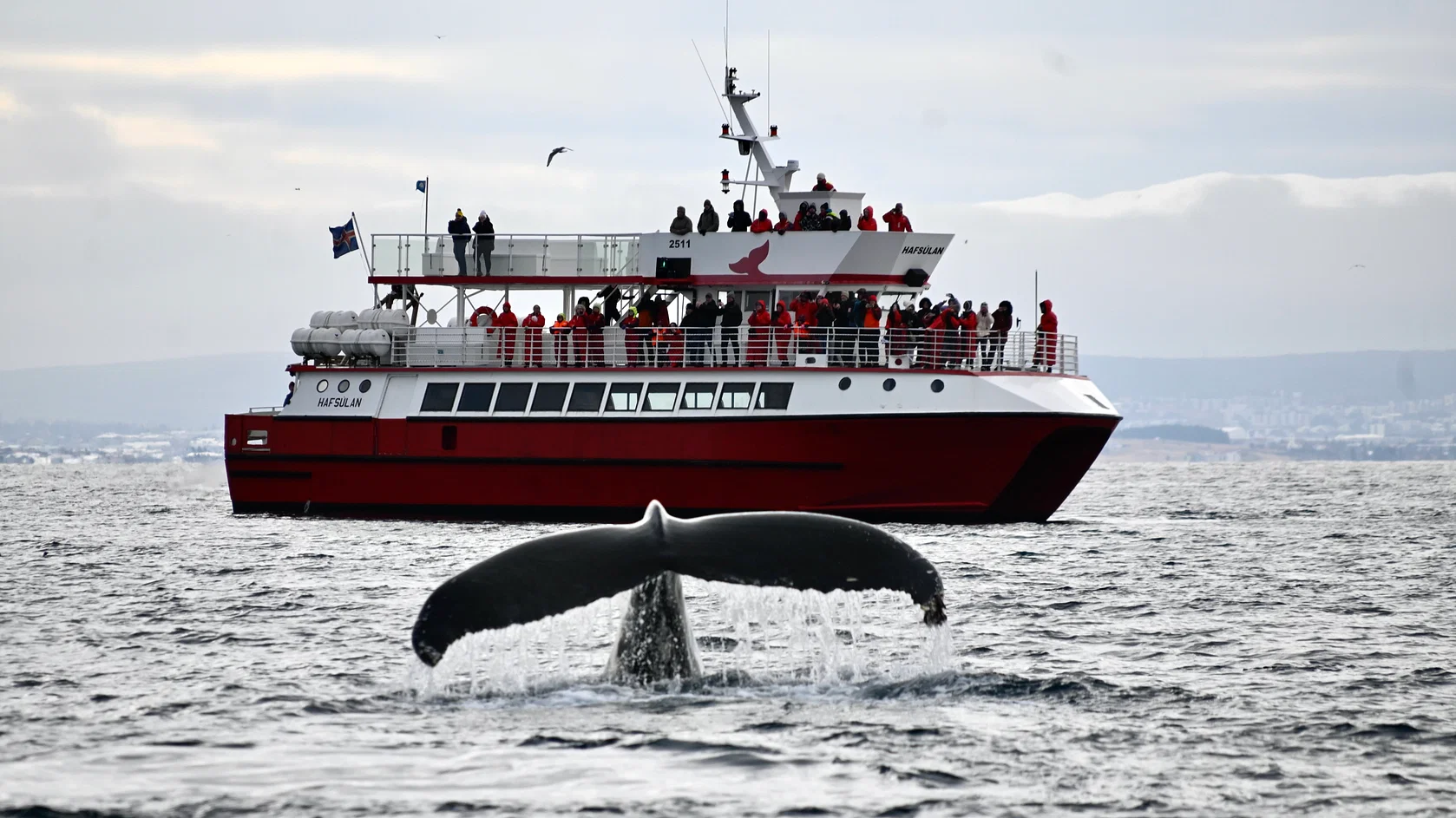
Reykjavik's whale watching industry operates from a city harbor closer to open feeding grounds than almost any European capital—vessels reach productive water within twenty minutes of departure. The proximity is not accidental: Faxaflói Bay's cold, nutrient-rich currents support dense krill and capelin populations that draw baleen whales and toothed cetaceans throughout the year. Minke whales form the backbone of Reykjavik sightings, present in the bay nearly every month and accounting for the majority of encounters from April through October. Humpback whales arrive later in spring as water temperatures rise, typically observed from May onward and peaking in July and August when multiple individuals may feed within sight of tour groups. White-beaked dolphins travel in pods of five to fifteen and appear with high frequency during summer months, often approaching vessels. Harbour porpoises, smaller and more elusive, replace dolphins as the dominant toothed species in autumn and winter. Orcas pass through Faxaflói irregularly, following herring schools, with sightings clustered in late winter and early spring but never guaranteed. Sighting rates reflect both animal presence and operator experience—Reykjavik's established companies track whale movements daily and adjust routes based on recent reports and sea conditions. The 85 to 95 percent success figure cited by most operators includes all cetacean species; tours that encounter only harbour porpoises or distant blows still count as successful sightings. Weather plays a larger role than season in determining whether you see whales clearly: flat seas allow spotters to detect surfacing animals at distance, while wind chop and swell obscure blows and dorsal fins even when whales are present. Whale watching in Reykjavik happens in open water with no land barriers or sheltered bays, meaning every tour exposes passengers to North Atlantic conditions. Operators provide warm suits for RIB excursions and heated cabins on larger vessels, but the experience remains fundamentally maritime—no glass-bottom comfort or guaranteed close encounters. The animals control proximity, and Icelandic regulations enforce minimum approach distances. Most sightings occur at fifty to two hundred meters, close enough to distinguish species and observe surfacing behavior but distant enough that telephoto lenses earn their weight.
“Faxaflói Bay's cold, nutrient-rich currents support dense krill and capelin populations that draw baleen whales and toothed cetaceans throughout the year.”
Best Time to See Whales in Reykjavik: Seasonal and Daily Windows
Whale watching in Faxaflói Bay is possible year-round, but the summer months between April and September provide the highest frequency of sightings and calmer sea conditions. This period aligns with the peak activity of minke whales, white-beaked dolphins, and harbor porpoises.
Summer (June–August)
High volume of visitorsMild temperatures around 10–13°C. Longer daylight hours allow for more frequent tour departures.
Spring/Autumn (April–May, Sept–Oct)
Moderate tourist numbersVariable conditions, 5–9°C. These transition months offer good sighting opportunities with fewer crowds.
Winter (November–March)
Lower visitor levelsCold temperatures, 0–4°C. Rougher sea conditions may lead to tour cancellations; sightings are less frequent.
Daily Windows
Varied based on demand— Morning departures often benefit from calmer sea conditions compared to later in the day.
Verdict: The best opportunity for reliable sightings and favorable weather is during the summer months of June through August, ideally departing on a weekday morning.
Daily Operating Hours for Whale Watching in Reykjavik
The Reykjavik Old Harbor serves as the central hub for whale watching departures, with operators maintaining consistent daily office hours to assist visitors.
| Monday | 09:00–17:00 | |
|---|---|---|
| Tuesday | 09:00–17:00 | |
| Wednesday | 09:00–17:00 | |
| Thursday | 09:00–17:00 | |
| Friday | 09:00–17:00 | |
| Saturday | 09:00–17:00 | |
| Sunday | 09:00–17:00 |
How to Get to Reykjavik Old Harbor for Whale Watching
Whale watching tours depart from Reykjavik Old Harbor, located in the central 101 district. The harbor area is accessible by public bus, car, or on foot from the city center.
Strætó lines 1, 3, 6, or 14 to Mýrargata stop
Parking available near Geirsgata or Tryggvagata
Walk towards the harbor via Ægisgata or Mýrargata
Understanding Costs When You See Whales in Reykjavik
Access to the Reykjavik Old Harbor is free, meaning there is no entry fee to visit the area. Costs for whale watching are determined solely by the tour operator and the type of vessel selected for your excursion.
While harbor access is 0 ISK, actual costs for whale watching tours fluctuate based on the operator and whether you choose a RIB boat or a larger vessel.
Checklist for Those Who Want to See Whales in Reykjavik by RIB Boat
RIB boats travel fast and open to the elements, so preparation matters.
-
Book your tour in advance — Departures fill quickly, especially in summer months.
-
Wear warm base layers — Even in summer, open water travel drops the temperature significantly.
-
Bring waterproof outer layers — Sea spray is constant on a RIB boat.
-
Dress in layers you can adjust — You'll warm up once moving but need insulation during whale stops.
-
Wear closed-toe shoes with grip — Deck surfaces can be wet and the boat moves abruptly.
-
Arrive 30 minutes before departure — Check-in, safety briefing, and gear fitting take time.
-
Leave large bags behind — RIB boats have limited secure storage space.
Check availability
Common questions about whale watching in Reykjavik
Everything you need to know about can you see whales in reykjavik